
Compound · Laboratory diluent with preservative
Bacteriostatic water
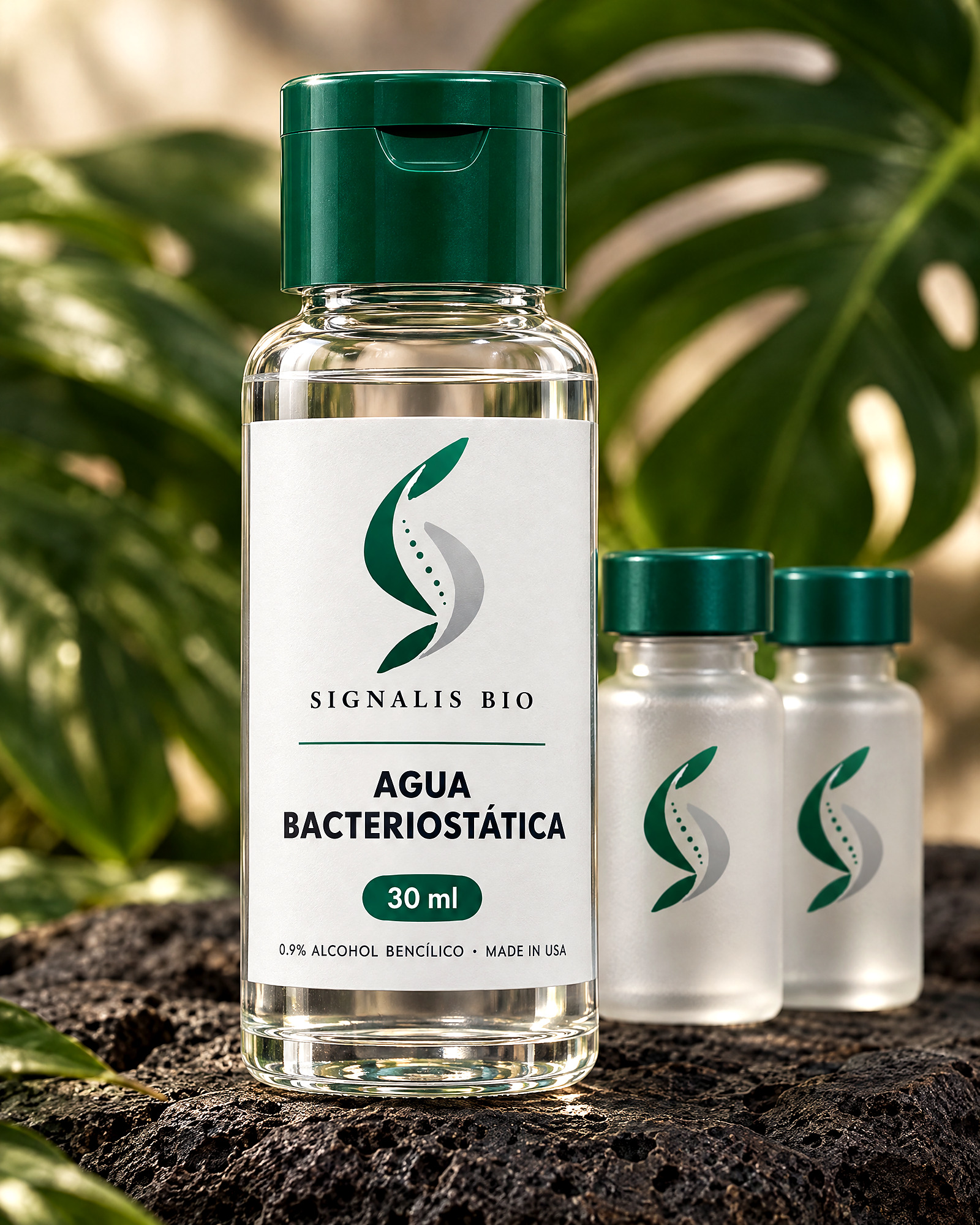
FormatBottle containing 30 ml of sterile liquid diluent, with 0.9 % benzyl alcohol as a preservative.
What science explores · not a promise
- Diluent quality
- Microbiological control
- Material compatibility
What it is
Bacteriostatic water is sterile water containing 0.9 % benzyl alcohol as a preservative, presented as a laboratory diluent. It is not a peptide or a hormone blend. The term bacteriostatic describes the preservative’s role in relation to bacterial growth; it does not mean that the product eliminates every microorganism or that any associated material remains sterile. Composition, container integrity, and batch documentation are separate features requiring independent evaluation. Its inclusion in a peptide catalog places it within the supplies category, not among molecules with activity at peptide receptors. Analytical descriptions should therefore distinguish the water, preservative, and packaging.
This material is research grade and is not a medicine. Published observations depend on the experimental system and its controls; they are not a promise for people. Documentation of identity, purity, and origin must be evaluated independently of any scientific hypothesis or proposed biological mechanism.
Origin
This formulation is made through industrial water purification and addition of a preservative; it is not a biological extract. Its origins lie in the development of preserved sterile solutions in pharmaceutical technology laboratories during the twentieth century. There is no single molecular discovery date comparable to that of a synthetic peptide.
How it is studied
It is evaluated through physicochemical and microbiological tests of the water, preservative, and container. Laboratories measure benzyl alcohol identity and content, sterility, endotoxins, and closure integrity against documented specifications. Chemical compatibility can also be examined in experimental systems. These are not studies of efficacy in people or evidence about clinical properties of peptides. These studies make no promises of personal effects. Available human information has limitations and does not amount to evidence for this commercial batch. Interpretation requires reviewing controls, reproducibility, analytical identity, and differences between models before drawing scientific conclusions about the observations.
Related lessons



Related readings
How a research-grade peptide is made and documented
Reading · 4 min
How a research-grade peptide is made and documented
From a defined sequence to a verifiable label, manufacturing brings together chemical transformations, analytical checks and documents that must tell a consistent story.
Community questions · Episode 1
Reading · 4 min
Community questions · Episode 1
Ten common questions clarify basic concepts, document reading, and the boundaries of educational content, with brief answers separating information from personal recommendations.
Dr. Peptide is a virtual presenter created with artificial intelligence; she is not a healthcare professional. This content is educational and is not medical advice, diagnosis or treatment. Decisions about your health belong with a licensed professional. Research-grade products; sale to adults 18+ only.
Follow us on Instagram · @Signalisbio