Reading · Foundations · 4 min
What science explores in four areas, explained without promises
Four areas organize scientific questions about peptides and other molecules, but every study requires attention to its model, measurements, and limits.
Dr. Peptide · AI-created virtual presenter
A research area is a set of questions, not a list of promises. Metabolism, repair, skin, and cellular longevity are broad names that organize different phenomena. Each can include experiments with cells, animal models, and studies involving people. Sharing a thematic label does not mean that all those studies have the same scope or that their conclusions can be exchanged freely.
A map helps identify regions; it does not describe every feature of the ground. In the same way, these four areas guide reading without deciding what a compound means for an individual. A catalog may show molecules connected with these questions. That thematic connection does not turn a commercial listing into clinical evidence or a research material into an approved medicine.
Before the map: preclinical and clinical evidence
Preclinical evidence comes from systems studied before clinical evaluation, such as cell cultures or animal models. It allows mechanisms to be examined under defined conditions. A change in a cellular signal describes what happened in that system. It does not establish what will happen in people, where biological differences, individual histories, and many variables simplified by the model are also involved.
Clinical research studies people using defined criteria and measurements. It also requires critical reading: sample size, comparison group, duration, and design limitations all matter. An observational study can identify associations without establishing cause. A controlled trial answers a bounded question, not every possible question. The word clinical does not remove uncertainty or make every product sharing a molecular name equivalent to the material examined.
A research area names an open question, not a promise to the reader.
Metabolism and body composition
Metabolism includes processes that transform nutrients and energy. Body composition describes components of the body, such as fat tissue and lean mass, rather than reducing them to a single figure. Research in this field must specify what is measured: a molecular signal, a metabolic variable, or a bodily characteristic. Changing the measurement also changes the question and the reach of the conclusion.
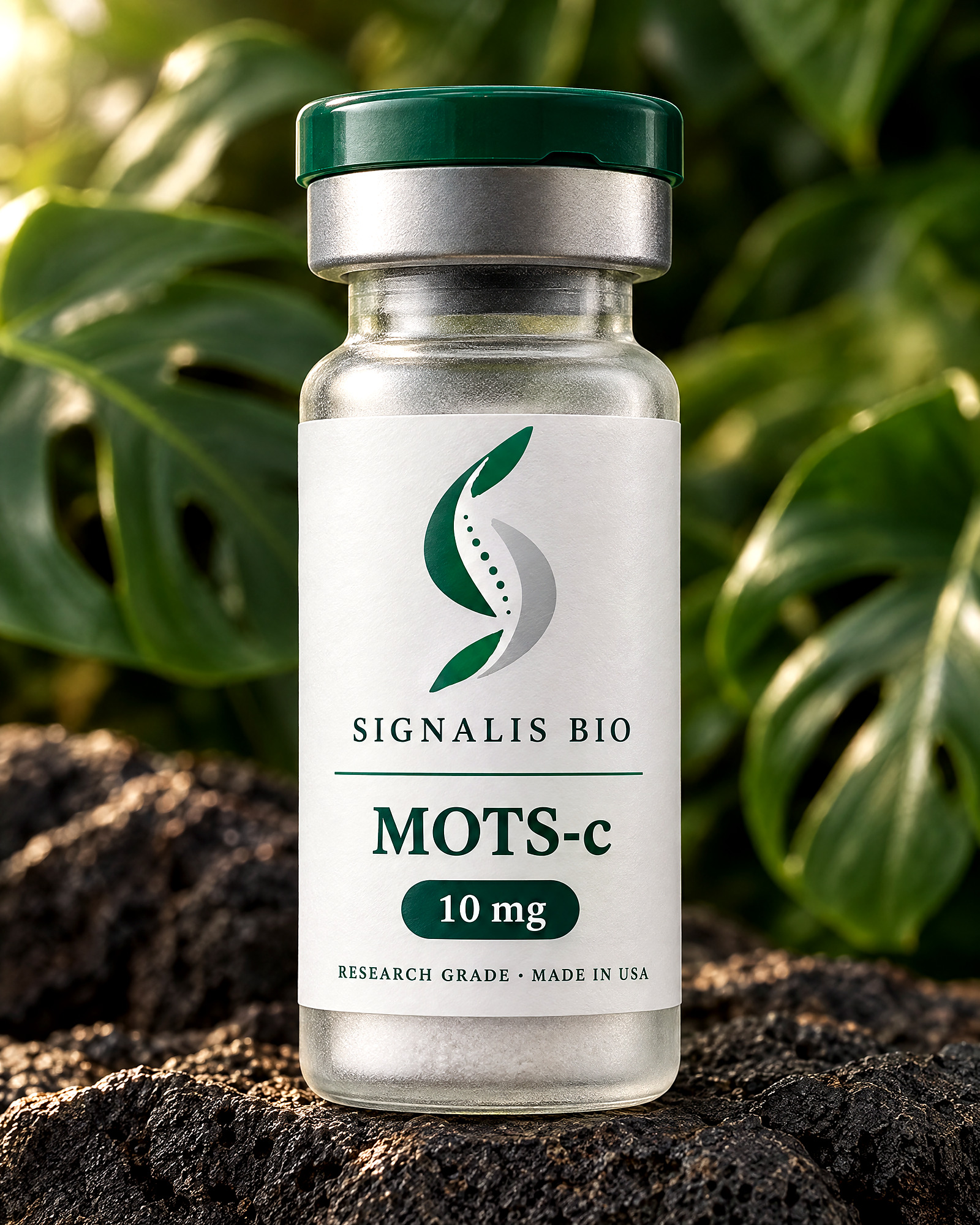
As catalog examples, MOTS-c and AOD 9604 are studied in questions related to metabolism. Available evidence is not equally developed for every molecule or model. For MOTS-c, there is a preclinical foundation and early human data, including observational work. The area name cannot predict an individual response or replace a review of the particular study, its setting, and the comparison it actually made.
Repair and recovery
Repair describes processes through which tissue responds to a disturbance and reorganizes its components. Recovery is a broader word whose meaning depends on the study context. In a laboratory, researchers may measure signals, tissue organization, or mechanical characteristics. None of those measurements should simply become a statement about an everyday experience or about a particular person outside that experimental setting.
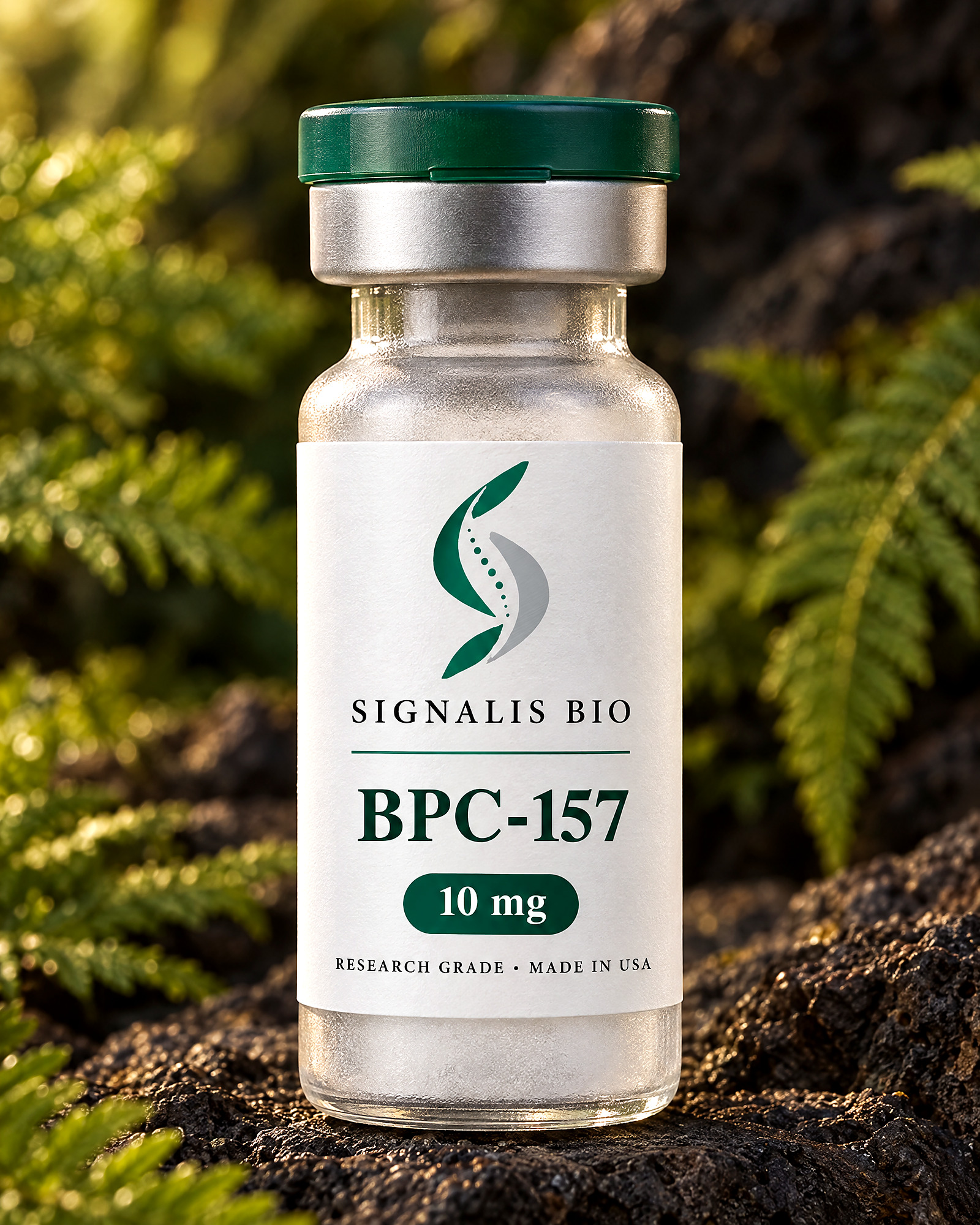
BPC-157 is studied in models related to tissue repair. Much of the literature is preclinical and human clinical data are limited; it is not an approved medicine. That qualification belongs alongside the name, rather than hidden at the end. An animal model can support hypotheses about biological processes, but it does not provide an automatic clinical conclusion or a personal recommendation.
Skin and collagen
Skin contains cells, fibers, and a matrix that organizes the tissue environment. Collagen forms part of that matrix, but it does not summarize all skin biology. Researchers may examine cellular activity, gene expression, or structural components. Measuring one of these elements is not the same as describing the whole skin, and a laboratory image is not a prediction for an individual.
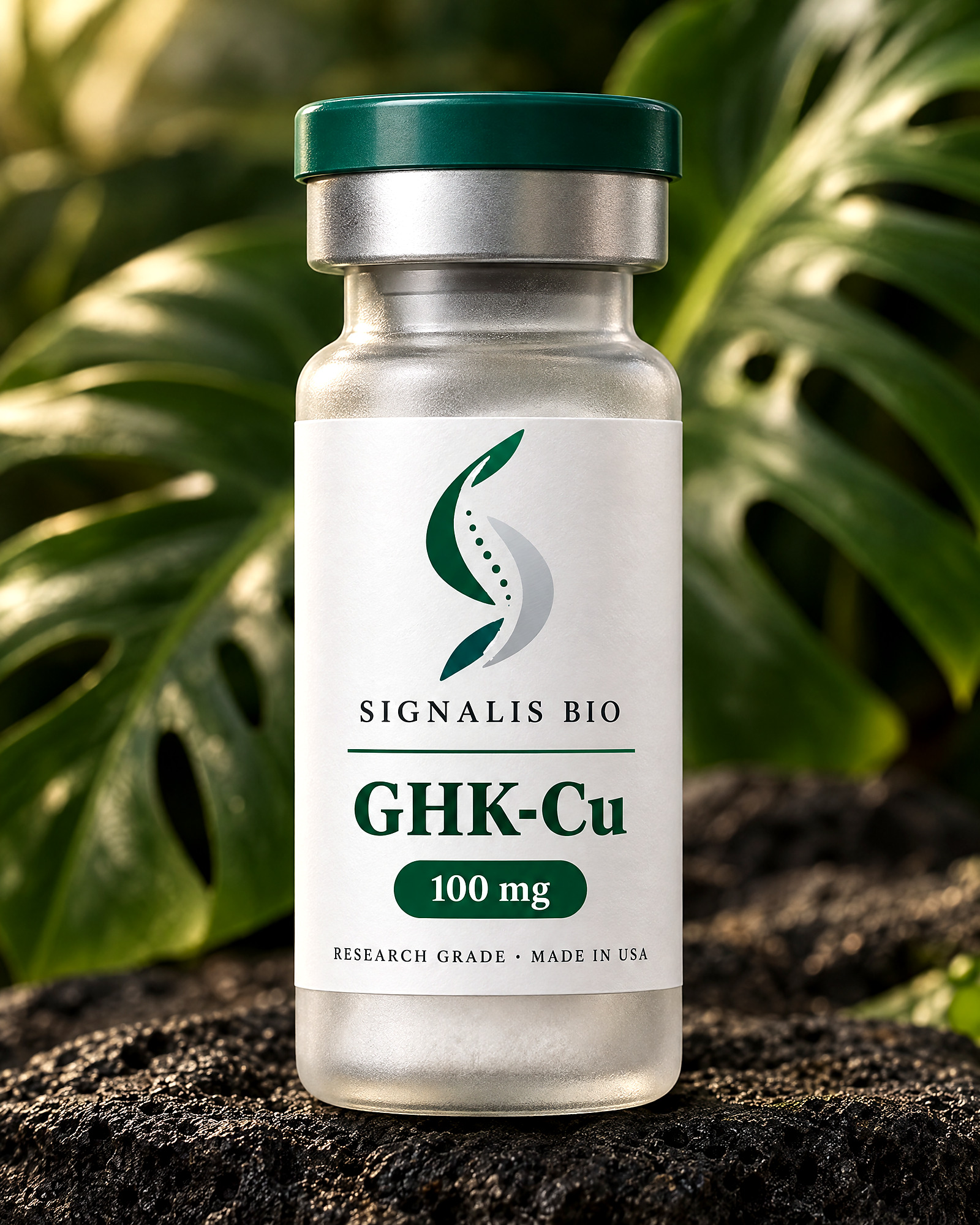
GHK-Cu is studied in questions related to skin and collagen. There are cellular investigations and human studies in dermatological settings, with specific designs and formulations. Observations should not be transferred from one presentation to another without evidence. A molecule appearing in cosmetic literature does not turn a research grade vial into a finished cosmetic product or an approved medicine with a clinical indication.
The strength of a conclusion depends on the study behind it, not on the appeal of its topic.
Cellular longevity
Cellular longevity examines processes connected with the aging of cells and biological systems. It includes questions about energy, molecular maintenance, and responses to stress. It is not another expression for living more years. An age-associated marker can be interesting without establishing that changing it alters human lifespan. The distance between those two statements is an essential part of reading the science carefully.
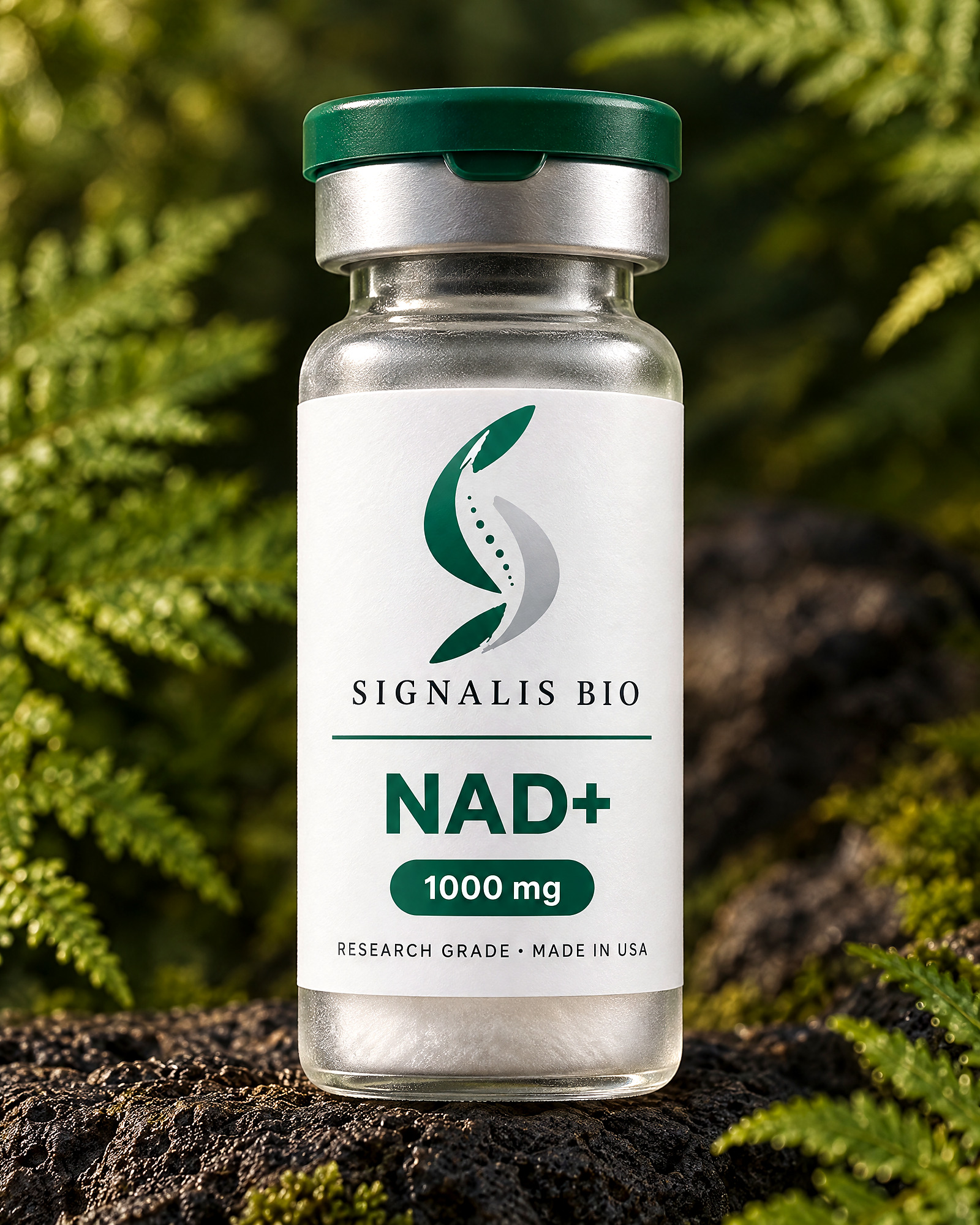
NAD+ is studied in questions about energy metabolism and cellular processes connected with aging. It is a coenzyme, not a peptide; sharing catalog space does not make chemical categories identical. Cellular measurements and human observations must be read according to their design. No longevity label justifies presenting a research product as a promise about years of life or a forecast for any individual.
Reading the map without making a recommendation
The four areas overlap because cells do not divide their processes into chapters. That overlap makes research valuable, but it also calls for careful language. A sound reading identifies the model, the variable, and the boundary before drawing conclusions. Personal or health decisions belong with a licensed healthcare professional; the purpose of this map is to understand questions, not to select products.
Dr. Peptide is a virtual presenter created with artificial intelligence; she is not a healthcare professional. This content is educational and is not medical advice, diagnosis or treatment. Decisions about your health belong with a licensed professional. Research-grade products; sale to adults 18+ only.