Reading · Community questions · 4 min
Community questions · Episode 1
Ten common questions clarify basic concepts, document reading, and the boundaries of educational content, with brief answers separating information from personal recommendations.
Dr. Peptide · AI-created virtual presenter
Short questions often open wider conversations. This first episode brings together common questions about materials, documents, and scientific language. The answers separate what a label describes from what a test can establish, without turning a general explanation into a personal recommendation.
How does a peptide differ from a protein?
A peptide is a chain of amino acids joined by peptide bonds. Proteins are also made of amino acids, but they usually have longer chains and more complex structures. The boundary between the terms is not always rigid: scientific context matters. Sharing basic building blocks does not mean sharing a function. The order of the amino acids and the shape of the molecule matter alongside the length of its chain.
What does research grade mean?
It means that the material is presented within a research framework, not as a medicine, supplement, or finished cosmetic product. The phrase is not a regulatory authorization or a universal guarantee covering every attribute. It belongs alongside the declared identity, batch number, and available documents. Even when a molecule appears in other regulated settings, that circumstance does not automatically change the category of the particular material shown in the catalog listing.
Why does the vial contain powder?
The powder is a lyophilized presentation. Lyophilization removes water under controlled low pressure and leaves dry material that may resemble powder or a small porous cake. Appearance alone cannot identify the compound. It cannot reveal purity either: two visually similar materials may have different documentation. Identifying what is inside the vial requires the label and the evidence associated with its batch, rather than an assumption based on the shape of the dry material.
What does HPLC purity tell us?
HPLC is a liquid chromatography technique that separates components of a sample. Purity expressed through this method describes the proportion of signals under specific analytical conditions. The percentage needs the context of the report and the corresponding batch. By itself, it does not state the declared package content or establish sterility or the absence of every possible impurity. It is a specific analytical answer, not a complete summary of material quality.
What does mass spectrometry confirm?
Mass spectrometry provides measurements consistent with molecular identity, including the mass of the species analyzed. Comparing measured mass with expected mass is part of identity assessment. It should not be confused with a universal test: distinguishing certain structures may require additional information. Its value lies in the collection of evidence and the connection between sample, method, and report, rather than in mentioning the technique without showing the documents associated with it.
What is the batch number for?
The batch number connects a unit with a production group and its records. It resembles a folder reference: it points toward specific documents, not any certificate carrying the same compound name. The label and report should show matching references. A readable batch number makes it easier to examine the documentary background of a listing and distinguish different production groups, even when they share a name, format, or package design. That connection is called traceability.
A clear question distinguishes the material name, its evidence, and the limits of that evidence.
How are vials and strips stored?
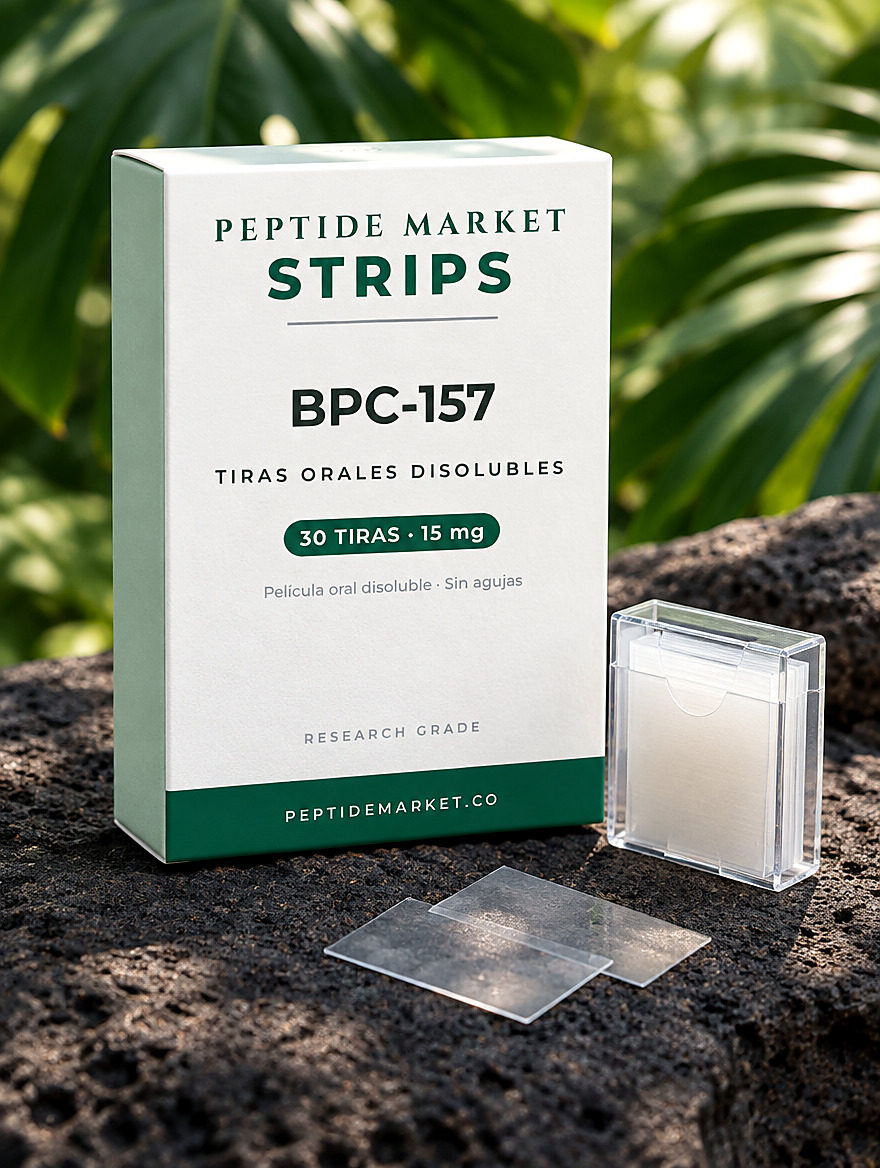
Vials are kept refrigerated, protected from light, and with the closure sealed; freeze–thaw cycles should be avoided. Strips are kept at room temperature, inside their box and away from humidity. These are general principles concerning the object and its environment. The particular presentation and its documentation still matter. Keeping the label readable also preserves a visible connection with the corresponding batch, rather than leaving an unidentified object separated from its records.
Is Dr. Peptide a physician?
No. Dr. Peptide is a virtual presenter created with artificial intelligence, not a physician or a healthcare professional. Her content is educational: it explains concepts, vocabulary, and the limits of evidence. The character title is not a clinical credential. Her explanations do not replace an individual assessment or establish personal recommendations. A personal or health decision belongs with a licensed healthcare professional who has the relevant context and responsibility for that decision.
Does the store recommend products for personal goals?
No. The store can describe what a listing declares, explain a format, or clarify which document belongs to a batch. Selecting a product for a personal goal or a health situation belongs with a licensed healthcare professional. That boundary remains important even when a question seems simple. A thematic label, such as metabolism or skin, organizes scientific information; it does not determine which material would be appropriate for a particular person.
How should a catalog listing be read?
Start by identifying the compound or blend name. Then distinguish the format and check which unit the declared content refers to: a vial or a box, for example. Next, examine research grade status, the batch, and available documentation. Purity and identity should be read separately because they answer different questions. A clear listing organizes verifiable information; neither its figures nor its visual design becomes a clinical conclusion about the product it describes.
Dr. Peptide is a virtual presenter created with artificial intelligence; she is not a healthcare professional. This content is educational and is not medical advice, diagnosis or treatment. Decisions about your health belong with a licensed professional. Research-grade products; sale to adults 18+ only.