Reading · Formats and storage · 4 min
Lyophilized vial or oral strip: what changes and what does not
Packaging and storage distinguish two formats, but purity, identity, and batch documentation remain essential questions when reading a research material listing.
Dr. Peptide · AI-created virtual presenter
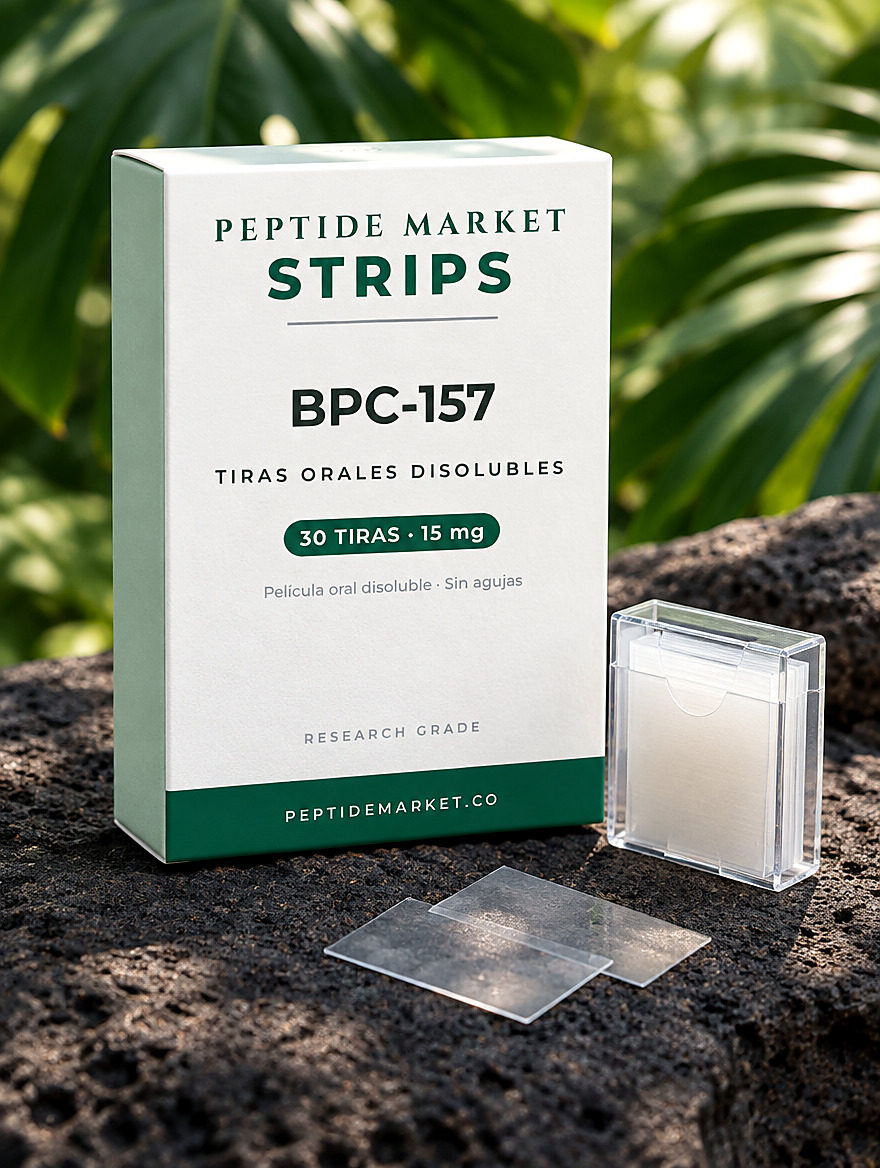
A small vial and a box of strips create very different pictures. One shows dry material behind glass. The other holds thin films inside a package. That visible difference can draw all the attention, although it tells only part of the story. Reading both formats carefully means separating the object, its declared content, and the documentation that connects it to an identified material.
This comparison concerns physical presentations, not a ranking of one above the other. A format name describes how a material appears in a catalog. It does not, by itself, answer questions about chemical identity, purity, or the quality of available records. Those are separate layers of information, and each deserves attention rather than being folded into the appearance of the package.
Two formats, side by side
In a lyophilized vial, the material appears as a dry powder or a small porous cake inside a rigid container. Lyophilized describes a process that removes water under controlled low pressure. The shape of the powder can vary. A smooth surface or an uneven edge is not enough to identify the substance or assess its purity. Appearance is an observation, not an analytical report.
An oral strip is a thin film that dissolves in the mouth. As an object, it has a thin, flexible surface, unlike the combination of glass, closure, and dry material. Its box organizes the commercial presentation. This description stops at physical form: it cannot establish equivalence between materials or replace the written information associated with each product in a catalog.
The reference unit also changes. One listing may declare content per vial; another may describe content per box and the number of strips. The first task is to identify which unit accompanies each figure. A box total is not automatically the content of one film, and the external size of a package cannot establish how much material it contains.
Lyophilized vial
Oral strip
- Format
- Lyophilized powder in a sealed vial
- Thin film that dissolves
- What the label declares
- Compound and content in mg
- Compound, mg per box, 30 strips
- What does not change
- Identity, purity and batch documents
- Identity, purity and batch documents
Storage belongs to the format
Vials are kept refrigerated, protected from light, and with the closure sealed. Freeze–thaw cycles should be avoided. Strips are kept at room temperature, inside their box and away from humidity. These differences concern the storage of the object and belong alongside the documentation for that particular presentation. They do not create a general ranking between the two formats.
Humidity and light are features of an environment, not abstract concepts. A damp box or a damaged label makes it harder to maintain a clear record of the object in front of the reader. Care of the packaging and readable identifying details therefore belong in the same conversation. This discussion does not describe laboratory operations or procedures involving the material.
Presentation changes; the need to identify the documented material and its batch does not.
Purity and identity remain different questions
Purity is often documented through high performance liquid chromatography, known as HPLC. The method separates components of a sample and describes the proportion of signals under specified analytical conditions. A percentage needs context: the method, the sample, and the corresponding document. By itself, it is not a complete account of every characteristic of the material or every possible quality attribute.
Identity asks a different question: whether measurements are consistent with the declared substance. Mass spectrometry provides information about molecular mass and, depending on the analysis, other sample features. It is one part of a body of evidence. Carefully designed packaging cannot replace that evidence, just as a purity figure cannot answer every question about chemical identity on its own.
The batch connects the object to its record
A batch number connects a commercial unit with a production group and its documents. For that connection to be useful, the reference on the package must match the reference on the report. A certificate from another batch, even with the same compound name, does not automatically describe the object being examined. Traceability depends on that specific match, not on a familiar heading.
Declared content is not another word for purity. One describes a quantity associated with a unit; the other describes an analytical characteristic under a method. Confusing them turns different figures into a single impression of quality. Reading them separately makes questions more precise, without assigning the format properties that its documents have not established.
A figure without a unit and a certificate without a batch leave a listing only partly understood.
A comparison with clear boundaries
An orderly reading begins with the compound or blend name, continues with format and content unit, and then checks the batch and its documentation. The corresponding storage guidance completes the picture. None of these steps requires declaring a winner between vial and strip. Each requires distinguishing information about the object from evidence supporting its identification.
Research grade describes material intended for research, not authorization as a medicine. Changing the package does not change that boundary. When a conversation moves from catalog information to a personal or health decision, it belongs with a licensed healthcare professional. The purpose of this comparison ends earlier: to make physical differences visible without losing the shared questions about documentary quality.
Dr. Peptide is a virtual presenter created with artificial intelligence; she is not a healthcare professional. This content is educational and is not medical advice, diagnosis or treatment. Decisions about your health belong with a licensed professional. Research-grade products; sale to adults 18+ only.